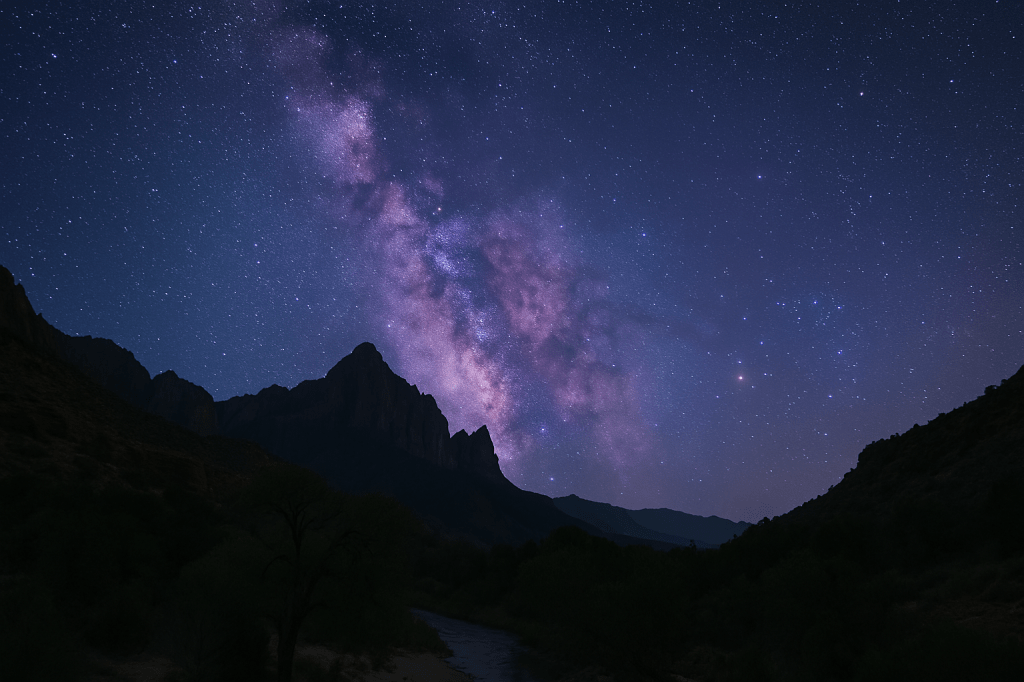
Utah’s Dark Skies: Where and When to Stargaze in the Southwest’s Celestial Playground
When the sun dips behind Utah’s iconic red rock formations, an entirely new spectacle emerges overhead—the night sky. With its high elevation, dry climate, and vast stretches of protected wilderness, Utah is one of the best places in the world for stargazing. The state is home to more International Dark Sky Parks than any other, and whether you’re a casual observer or an astrophotographer, you’ll find unmatched clarity and cosmic wonder here.
🌌 Top Dark Sky Locations in Utah
- Zion National Park
Best seen from the Kolob Terrace Road or the Canyon Overlook Trail at night. Zion is an official Dark Sky Park and offers ranger-led night programs during summer months. - Bryce Canyon National Park
With its high elevation (up to 9,000 feet), Bryce boasts some of the clearest skies in North America. Their annual Astronomy Festival is a must-see. - Capitol Reef National Park
One of the most remote parks in Utah. Camp in the Fruita Campground or drive the Scenic Drive for breathtaking Milky Way views. - Canyonlands National Park
Head to Island in the Sky or The Needles for vast views and minimal light pollution. The dry air here makes the stars feel impossibly close. - Dead Horse Point State Park
Just outside Moab, this state park offers epic night sky viewing above dramatic canyons and mesas. Perfect for photographers. - Great Basin National Park (technically in Nevada but part of Utah’s stargazing circuit)
Bordering Utah, it’s one of the darkest places in the lower 48.
📅 Best Times to Stargaze in Utah
1. Avoid the Full Moon
Even in the darkest places, a full moon will drown out fainter stars and the Milky Way. Aim for the new moon phase, and the few days before and after it.
2. Check the Weather
Utah’s summer months (June–August) offer the clearest skies. However, spring and fall can be fantastic if you’re aiming to avoid summer heat and crowds.
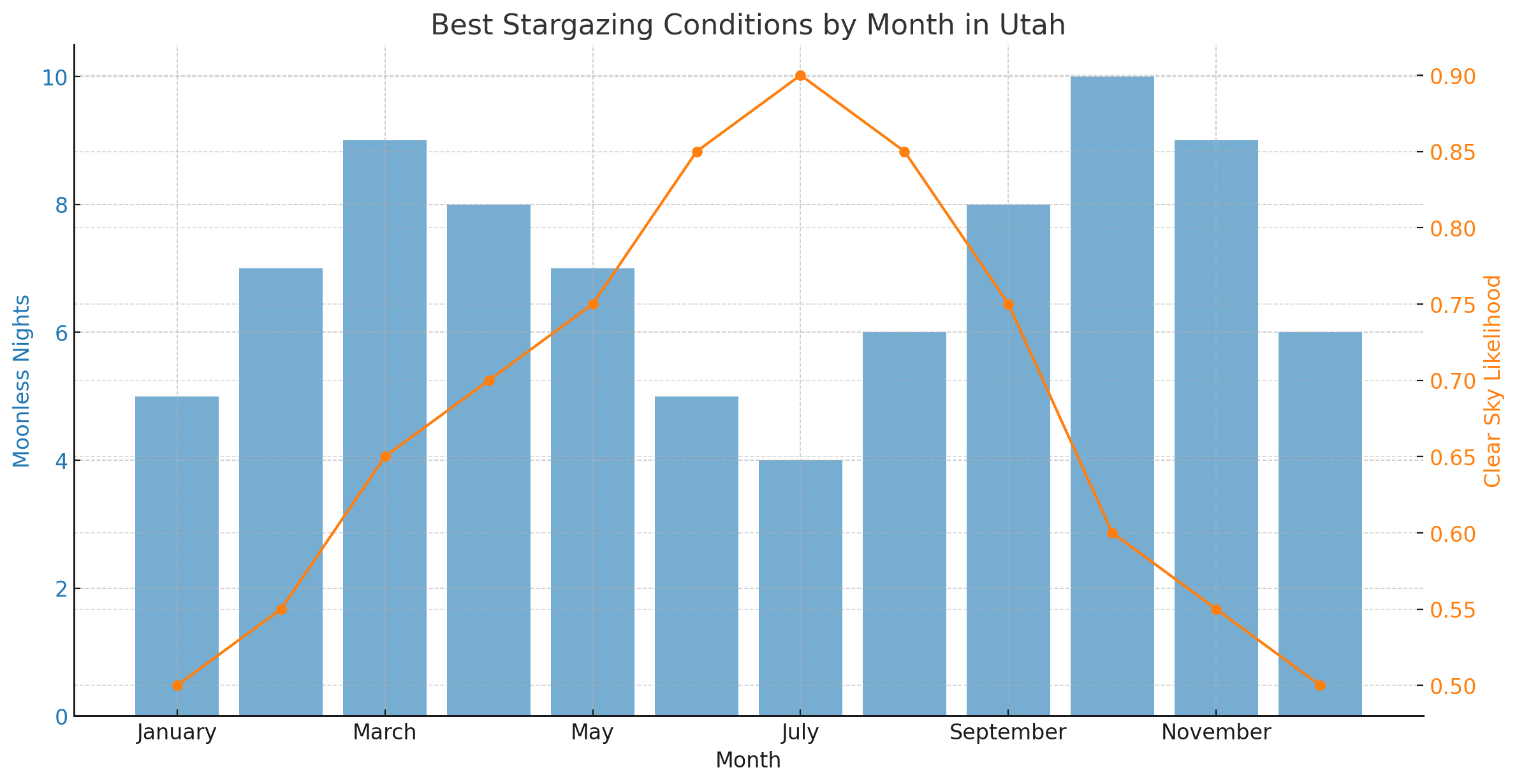
3. Use the Chart Below
This chart shows two critical stargazing factors by month:
- Moonless Nights (opportunities to see a full starfield)
- Clear Sky Likelihood (chance of cloud-free viewing)
📊 Infographic: Best Stargazing Conditions by Month in Utah
(See chart above)
- July offers the highest chance of clear skies but fewer moonless nights.
- October is the stargazing sweet spot—clear skies and plenty of dark nights.
- April and September are great shoulder seasons with a balance of visibility and comfort.
🛠️ Stargazing Tips
- Apps like Stellarium or Sky Guide will help you navigate constellations and planets.
- Bring binoculars or a telescope for enhanced viewing.
- Let your eyes adjust—give it at least 20 minutes without light.
- Avoid light pollution—even a smartphone screen can interfere with your night vision.
✨ Conclusion
Whether you’re standing beneath the towering cliffs of Zion or camping among the hoodoos of Bryce, Utah’s dark skies are a portal to the universe. Plan around the moon cycle, pick your season, and get ready for a show you’ll never forget.
 Launch Metrics
Leave a comment